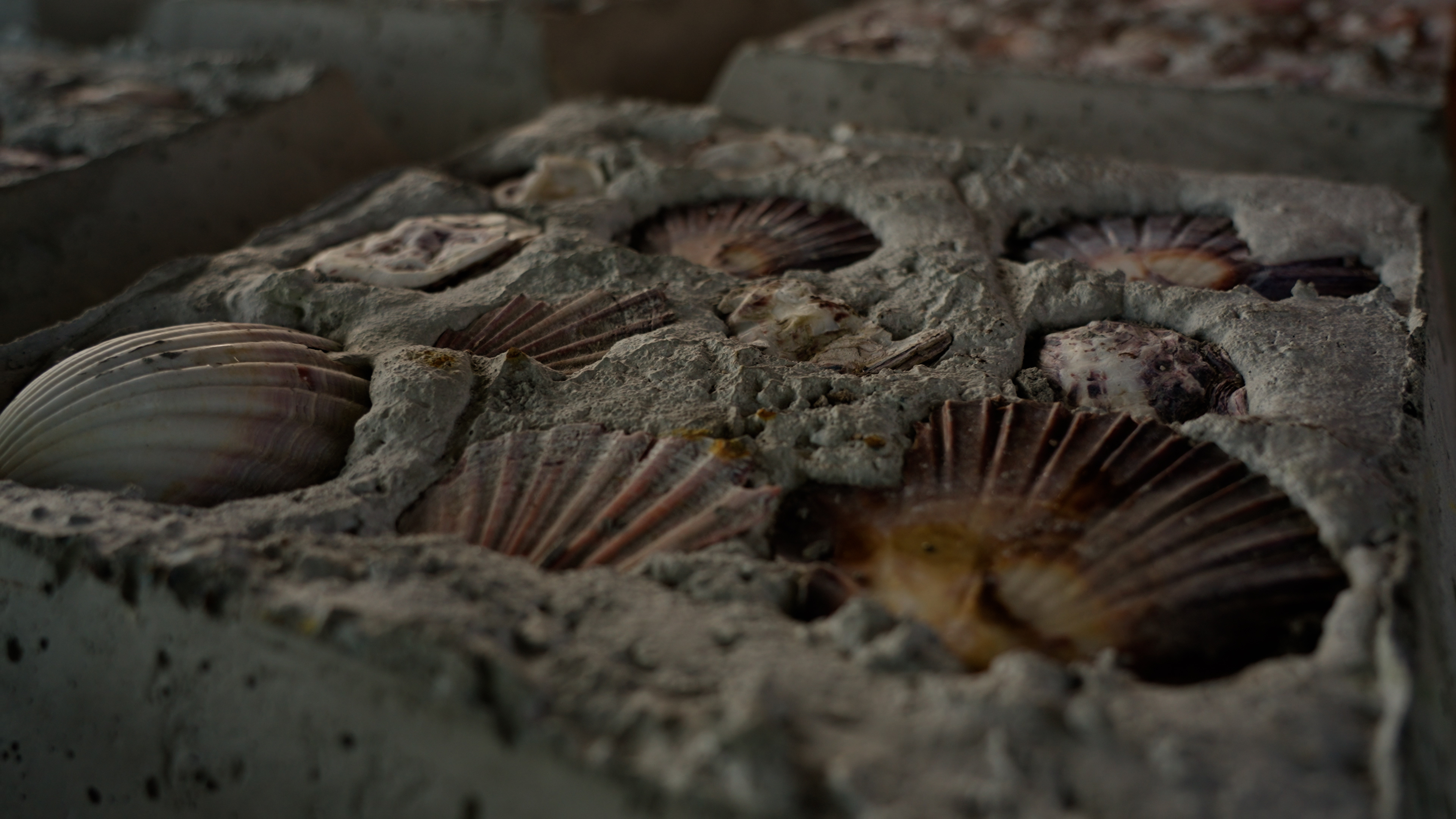
LIVING INFRASTRUCTURE DEMONSTRATION
LIVING
MARINE ECOMATS
Transforming bridge scour protection into seeded habitat for native marine life.
EXPLORE THE TRIAL ↓FIELD FILM / LIVING ECOMATS
Living EcoMats in action.
01 / PROJECT CONCEPT
Scour protection
that starts living.
The proposed demonstration at the Swan River Crossings Fremantle Traffic Bridge tests whether native marine sponges can be salvaged, cultivated and seeded onto purpose-designed EcoMats. The goal is to accelerate habitat formation while the mats perform their primary engineering role.
02 / BIOLOGICAL CIRCULARITY
Recover. Cultivate.
Return.
Marine growth that would otherwise be lost during pile removal becomes parent stock for new living infrastructure.
SALVAGE
Recover viable native sponges from decommissioned piles.
ACCLIMATISE
Stabilise parent stock in flow-through seawater systems.
CULTIVATE
Create 1–2 cm propagules using controlled fragmentation.
SEED
Attach or disperse fragments using one of three trial methods.
MONITOR
Compare survival, growth and natural colonisation over time.
OPERATIONAL INTEGRATION
Designed to move
with construction.
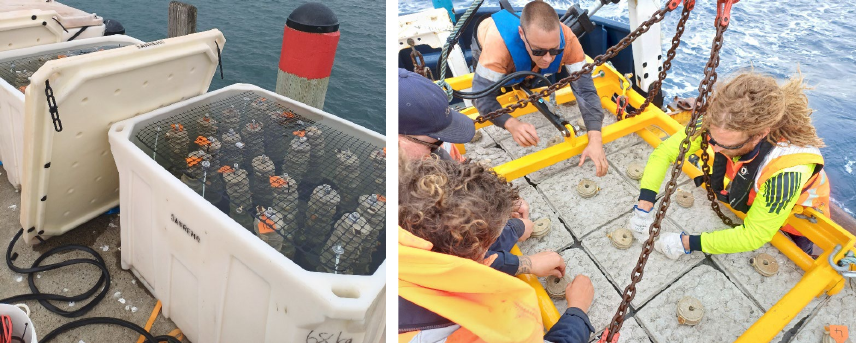
Prepared propagules travel in seawater systems and are attached or dispersed within the bridge alliance’s planned marine operations. Biological work is integrated around the engineering sequence rather than added as an afterthought.
04 / EVIDENCE PROGRAM
Measure what
establishes.
ROV surveys compare seeded “impact” groups with unseeded controls at the same depth, tracking sponge survival, growth and the arrival of other marine life.
ESTABLISHMENT
Confirm mat location and assess initial sponge attachment after installation.
SURVIVAL
Measure survival, growth and early natural colonisation.
PERFORMANCE
Compare ecological performance across depths, mat types and seeding methods.
DEMONSTRATION OUTCOMES
From trial evidence
to an industry-ready system.
VALIDATE
Test sponge salvage, cultivation and deployment under operational construction conditions.
COMPARE
Quantify ecological performance across seeded EcoMats and conventional controls.
REFINE
Turn field evidence into recommendations for product development and commercialisation.
COMMUNICATE
Make the environmental value visible through professional monitoring and project media.